Black & Decker Weed Eater Instruction Manual: A Comprehensive Guide
Black & Decker weed eaters offer affordable power, ranging from budget-friendly string trimmers to versatile cordless options, making yard work accessible to everyone.
Black & Decker has long been a trusted name in power tools, and their weed eaters are no exception. Recognized for providing reliable performance at accessible price points, these tools cater to a wide range of homeowners and yard maintenance needs.
From simple, corded models ideal for smaller yards to powerful, cordless options offering greater freedom and versatility, Black & Decker provides a solution for nearly every landscaping task. Their string trimmers are particularly noted for being among the most affordable options available, without sacrificing essential functionality.
This comprehensive guide will walk you through everything you need to know about operating, maintaining, and troubleshooting your Black & Decker weed eater, ensuring years of efficient and effective use.
Understanding Your Model Number
Your Black & Decker weed eater’s model number is crucial for accessing specific information, parts, and support. This unique identifier distinguishes your particular model within the broader Black & Decker lineup, ensuring you receive the correct guidance for assembly, operation, and maintenance.
The model number is typically located on a product label affixed to the motor housing or the battery compartment (for cordless models). It’s a combination of letters and numbers – for example, ST7200 or LST136.
Having this number readily available when contacting customer support, ordering replacement parts, or downloading specific manuals will significantly streamline the process and guarantee compatibility. Refer to your owner’s manual or the Black & Decker website to decode the specifics of your model.
Safety Precautions & Warnings
Operating a Black & Decker weed eater requires strict adherence to safety guidelines to prevent injury. Always wear safety glasses or a face shield to protect your eyes from flying debris. Ear protection is also recommended due to the noise levels produced during operation.

Ensure the work area is clear of bystanders, children, and pets. Never operate the weed eater in wet conditions or near flammable materials. Inspect the trimmer line for damage before each use, and avoid trimming near electrical wires.
Proper footwear is essential; wear sturdy, closed-toe shoes. Disconnect the power source (cord or battery) before making any adjustments or repairs. Always follow the instructions outlined in your owner’s manual.
General Safety Rules
Prioritize personal safety when using any Black & Decker weed eater. Maintain a firm grip with both hands and a balanced stance during operation. Avoid overreaching or operating on unstable surfaces. Be mindful of hidden objects that could be struck by the trimmer line, causing projectiles.
Never modify the weed eater or use unauthorized attachments. Regularly inspect the tool for damage and do not use it if any parts are missing or broken. Keep hands and feet away from the cutting head at all times.
Always disconnect the power source before changing the trimmer line or performing maintenance. Store the weed eater in a safe, dry location out of reach of children.
Specific Safety for Corded/Cordless Models
Corded models require extra caution to prevent electrical shock. Always use a properly grounded outlet and avoid operating in wet conditions. Inspect the power cord for damage before each use, and never pull the weed eater by the cord.
Cordless models necessitate careful battery handling. Do not incinerate or disassemble batteries. Use only Black & Decker-approved chargers. Avoid exposing batteries to extreme temperatures or direct sunlight.
Be aware of the added weight of batteries in cordless models and maintain a secure grip. Always remove the battery pack when not in use or when performing maintenance;
Parts Identification
Understanding your Black & Decker weed eater’s components is crucial for assembly, operation, and maintenance. Key areas include the string trimmer head, responsible for cutting grass and weeds, and the shaft & handle assembly, providing control and ergonomics.
The motor, whether electric or battery-powered, delivers the necessary power. Familiarize yourself with the power source details – cord specifications for corded models or battery voltage/amp-hours for cordless versions.
Locate the string release button, the guard, and the auxiliary handle. Knowing these parts ensures safe and efficient trimming.
String Trimmer Head Components
The string trimmer head houses several vital components. The spool holds the trimming line, while the automatic feed mechanism (if equipped) advances the line as it wears. A spring-loaded button or knob initiates this feed.
The eyelets guide the string, and the cap secures everything in place. Inspect these regularly for wear. Some models feature a bump feed system, releasing line with a tap on the ground.
Understanding how these parts interact is key to successful string loading and troubleshooting feeding issues. Proper maintenance extends the life of the trimmer head.

Shaft & Handle Assembly
The shaft connects the trimmer head to the motor housing, often adjustable for user comfort. Telescoping shafts allow customization of the working length. The handle provides grip and control, frequently featuring ergonomic designs for reduced fatigue.
Assembly typically involves securely attaching the shaft to both the head and motor, ensuring proper alignment. Some models utilize quick-release mechanisms for easy disassembly. Check for secure connections before each use.
A well-assembled shaft and handle contribute to balanced operation and precise trimming, enhancing overall user experience and control.
Motor & Power Source Details
Black & Decker weed eaters utilize either corded electric motors or cordless battery-powered systems. Corded models deliver consistent power directly from an outlet, suitable for larger areas. Cordless versions offer freedom of movement, powered by rechargeable lithium-ion batteries.
Motor power is typically measured in volts (V) and amps (A), indicating performance capability. Battery voltage impacts runtime and cutting power. Always use the recommended charger for optimal battery life.
Understanding your model’s power source is crucial for safe and efficient operation, ensuring adequate power for trimming tasks.
Assembly Instructions
Black & Decker weed eater assembly is generally straightforward. Begin by carefully unpacking all components and verifying against the parts list. Typically, assembly involves attaching the string trimmer head to the shaft, followed by connecting the shaft to the handle assembly.
Ensure all connections are secure before operation. For cordless models, proper battery installation is essential – align the battery pack with the tool base and click into place. Always refer to your specific model’s diagram for detailed guidance.
Double-check all fasteners for tightness before initial use.
Attaching the String Trimmer Head
Black & Decker weed eater string trimmer head attachment usually involves aligning the head with the drive shaft and rotating it until it clicks securely into place. Some models may require pressing a release button simultaneously. Ensure the head is firmly locked to prevent detachment during operation.
Inspect the trimmer head for proper string alignment before proceeding. If the string isn’t visible, gently pull on the string to extend it. Verify the string feeds freely. A secure attachment is crucial for safe and efficient trimming.
Consult your model’s specific diagram for visual guidance.
Connecting the Shaft & Handle
Black & Decker weed eater shaft and handle connection typically involves inserting the shaft into the handle tube. Align any provided markings and tighten the locking knob or collar securely. Ensure a firm, stable connection to prevent wobbling during use, which could compromise control and safety.
Some models feature adjustable handle lengths for ergonomic comfort. Extend or retract the handle to a suitable position and re-tighten the locking mechanism. Double-check the stability of the connection before starting the weed eater.
Refer to your model’s diagram for precise assembly instructions.
Battery Installation (Cordless Models)
Black & Decker cordless weed eaters require proper battery installation for optimal performance. Locate the battery compartment, usually at the base of the handle. Slide the battery pack into the compartment, ensuring it clicks securely into place. A fully charged battery is crucial for efficient trimming.
Verify correct polarity alignment before insertion. Some models utilize a release button; press it before removing or installing the battery. Always use Black & Decker approved batteries for compatibility and safety.
Check the battery charge level indicator before each use.
Operating Instructions
Black & Decker weed eaters are designed for efficient yard maintenance. Before starting, ensure the area is clear of obstructions and people. For corded models, carefully extend the cord, avoiding damage. For cordless models, confirm a fully charged battery is installed correctly.
Activate the safety lock, if equipped, and then depress the trigger to start the trimmer. Maintain a firm grip on the handle and guide the trimmer head smoothly along the desired cutting path. Avoid forcing the trimmer; let the rotating string do the work.
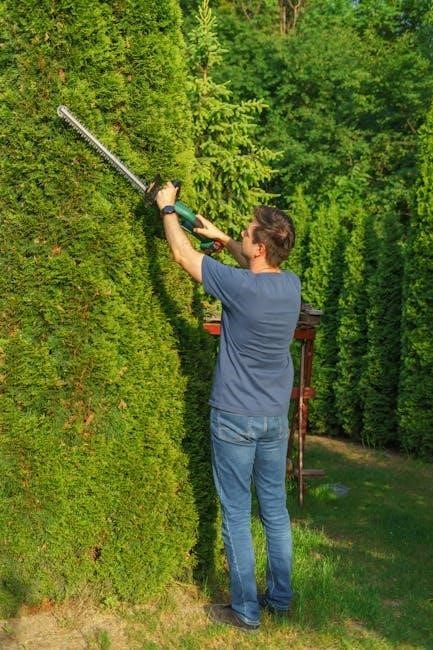
Always wear safety glasses during operation.
Starting the Weed Eater (Corded)
Black & Decker corded weed eaters require a properly grounded electrical outlet. Before plugging in, inspect the cord for any damage – do not use if damaged. Extend the cord carefully, ensuring it remains clear of the trimming area to prevent accidental cutting.
Most models feature a safety lock button; depress and hold this while squeezing the trigger. The motor should start immediately. If it doesn’t, double-check the outlet and cord connection. Maintain a firm grip on the handle during startup and operation;
Always unplug when not in use.
Starting the Weed Eater (Cordless)
Black & Decker cordless weed eaters utilize rechargeable batteries. Ensure the battery is fully charged before use for optimal performance. Insert the battery pack securely into the tool’s base, listening for a click to confirm it’s locked in place.
Similar to corded models, most cordless weed eaters have a safety lock-out button. Depress and hold this button while simultaneously squeezing the trigger to initiate operation. The motor should start quickly. If not, verify the battery charge and proper insertion.
Remove the battery when storing or not in use.
Proper Trimming Techniques
When using your Black & Decker weed eater, maintain a safe distance from plants and objects to avoid damage. Utilize a sweeping motion, moving from side to side, rather than directly into thick growth. This prevents strain on the motor and extends string life.
For optimal results, trim in small sections, overlapping each pass slightly. Avoid prolonged contact with hard surfaces like fences or sidewalks, as this can wear down the trimmer head. Angle the trimmer head slightly downward to effectively cut grass and weeds.
Always wear appropriate safety gear, including eye protection.
String Replacement & Loading
Maintaining the correct string length and ensuring proper loading are crucial for optimal performance of your Black & Decker weed eater. Different models utilize either automatic feed or manual feed systems, requiring specific loading procedures. Regularly check the string for wear and tear, replacing it when it becomes short or frayed.
Refer to your model’s specific instructions for the correct string diameter and length. Incorrect string can lead to feeding issues or damage to the trimmer head. Always ensure the power source is disconnected before attempting any string replacement or loading procedures for safety.
Automatic Feed vs. Manual Feed Systems
Black & Decker weed eaters employ two primary string feed mechanisms: automatic and manual. Automatic feed systems, often “bump feed,” release more string with a tap of the trimmer head against the ground, offering convenience during operation. However, they can sometimes be prone to tangling or inconsistent feed.
Manual feed systems require you to manually pull the string to advance it, providing greater control but demanding more frequent user intervention. Understanding your model’s system is key to efficient operation and troubleshooting. Always consult your instruction manual for specific details regarding your trimmer’s feed type.
Step-by-Step String Loading Guide
Black & Decker string loading varies by model, but generally involves opening the trimmer head, inserting the new string through designated guides, and winding it onto the spool; Ensure the string is loaded in the direction indicated by arrows on the spool and head.
Properly seat the spool within the head, close the cover securely, and test the feed mechanism. Refer to your specific model’s diagram in the instruction manual for detailed visuals. Incorrect loading can cause jamming or poor performance, so careful attention to detail is crucial for optimal trimming.
Troubleshooting String Feeding Issues
Black & Decker string feeding problems often stem from incorrect loading, tangled string, or a dirty trimmer head. First, ensure the string is loaded correctly, following the spool’s directional arrows. Clean debris from the head and spool, as buildup hinders smooth operation.
If the string still doesn’t feed, check for tangles within the spool. Gently unwind and reload. For automatic feed models, tap the head firmly on the ground while trimming to initiate feed. If issues persist, consult your model’s manual for specific troubleshooting steps.
Maintenance & Care
Black & Decker weed eaters require regular maintenance for optimal performance and longevity; After each use, clean the trimmer head and shaft, removing grass clippings and debris. Inspect the string trimmer line for wear and replace as needed. Periodically check the air vents on the motor to ensure they aren’t blocked, preventing overheating.
For cordless models, follow battery care instructions in the manual. Store the weed eater in a dry location, away from extreme temperatures. Proper lubrication of moving parts, as recommended by Black & Decker, will also extend its lifespan.
Cleaning Your Weed Eater
Black & Decker recommends cleaning your weed eater after every use to maintain peak performance. Disconnect the power source – unplug corded models or remove the battery from cordless versions – before cleaning. Use a dry cloth to wipe down the motor housing, shaft, and handle, removing grass, dirt, and debris.
Pay close attention to the trimmer head, carefully clearing away tangled vegetation. Avoid using water directly on the motor or electrical components. For stubborn residue, a slightly damp cloth can be used, ensuring it’s thoroughly dried afterward. Regular cleaning prevents buildup and ensures efficient operation.
Lubrication Recommendations
Black & Decker weed eaters generally require minimal lubrication for optimal function. However, periodic lubrication of moving parts can extend the life of your tool. Specifically, the trimmer head shaft may benefit from a light application of lithium-based grease; This reduces friction and ensures smooth operation during trimming.
Avoid over-lubricating, as excess grease can attract dirt and debris. Do not use oil, as it can damage plastic components. Inspect the shaft regularly and apply a small amount of grease as needed. Proper lubrication contributes to a longer lifespan and consistent performance of your Black & Decker weed eater.
Storage Guidelines
Black & Decker weed eater storage is crucial for maintaining its condition and ensuring longevity. Before long-term storage, thoroughly clean the trimmer, removing any grass, dirt, or debris. For corded models, carefully coil the power cord to prevent damage. For cordless models, remove the battery and store it separately in a cool, dry place;
Store the weed eater indoors, away from extreme temperatures and moisture. Avoid storing it in direct sunlight. Hanging the trimmer vertically can save space and prevent damage to the trimmer head. Regularly check the battery (for cordless models) during extended storage to maintain optimal charge levels.
Troubleshooting Common Problems
Black & Decker weed eaters, while reliable, can occasionally encounter issues. If the trimmer won’t start, check the power source – ensure the cord is securely plugged in (corded models) or the battery is fully charged and properly inserted (cordless models). Frequent string breakage often indicates improper trimming techniques or using the wrong string type.
Motor overheating can occur during prolonged use; allow the trimmer to cool down before resuming. If problems persist, inspect the trimmer head for obstructions or damage. Always disconnect the power source before performing any inspection or maintenance. Refer to the full manual for detailed troubleshooting steps.
Weed Eater Won’t Start
If your Black & Decker weed eater fails to start, begin by verifying the power supply. For corded models, ensure the power cord is firmly connected to a functioning outlet. Test the outlet with another device to confirm it’s providing power. For cordless models, confirm the battery is fully charged and correctly inserted into the tool.
Inspect the battery terminals for corrosion or debris. A faulty battery or a damaged cord can prevent operation. Also, check the safety lock-out button; it must be engaged for the trimmer to start. If these steps don’t resolve the issue, consult the full instruction manual.
String Breaks Frequently
Frequent string breakage with your Black & Decker weed eater often indicates improper trimming techniques or encountering excessively tough vegetation. Avoid edging along concrete or other hard surfaces, as this dramatically increases string wear. When trimming, maintain a slight angle to prevent direct impact with obstructions.
Ensure you’re using the correct string diameter recommended for your model, as using a thinner string can lead to snapping. Also, verify the string trimmer head is properly loaded and the string is feeding smoothly. If breakage persists, consider clearing the trimming area of debris and using a higher-quality replacement string.
Motor Overheating
If your Black & Decker weed eater’s motor overheats, immediately stop using it and allow it to cool down completely. Prolonged use, especially in hot weather or with a clogged air vent, can cause overheating. Ensure the air vents are free of debris like grass clippings and dirt before each use.
Avoid continuous operation; instead, work in shorter bursts with breaks in between. Overheating can also stem from forcing the trimmer through dense vegetation. Let the tool do the work, and avoid applying excessive pressure. If overheating continues, consult the warranty information or a qualified service technician.
Warranty Information
Black & Decker stands behind its weed eaters with a standard manufacturer’s warranty, typically covering defects in materials and workmanship for a specified period. The warranty duration varies by model and region, so retain your purchase receipt and original packaging.
The warranty generally does not cover damage resulting from misuse, neglect, unauthorized repairs, or normal wear and tear. To make a warranty claim, contact Black & Decker’s customer service department or visit their website for detailed instructions and claim forms. Proof of purchase is essential for processing any warranty request.
Finding Replacement Parts
Black & Decker replacement parts for your weed eater are readily available through several channels. Authorized retailers, both online and brick-and-mortar stores, stock common components like trimmer heads, spools of string, and batteries. The official Black & Decker website also features a parts finder tool, allowing you to locate specific parts based on your model number.
Third-party online marketplaces often carry Black & Decker parts, but ensure the seller is reputable to guarantee authenticity and quality. When ordering, always verify the part number to ensure compatibility with your weed eater model. Maintaining your tool is easier with accessible replacement parts!